Finishing a marathon is one of those experiences that can leave you feeling simultaneously exhausted and completely exhilarated. After months of early mornings, long runs and steadily increasing mileage, crossing the finish line brings a huge sense of relief. Your legs may be tired and your body may feel depleted, but for a few hours the excitement of finishing can make all of that seem secondary.
Then, over the following day or two, things can sometimes change. You might develop a scratchy throat, a runny nose, a cough or simply feel unusually tired and run down. Runners often refer to this as the “post-marathon cold” or “runner’s flu”, and it is common enough that many endurance athletes expect to feel under the weather after a big race.
The reality, however, is more complicated than the idea that a marathon simply weakens your immune system and causes you to get sick. Endurance exercise places a significant amount of stress on the body, but the race itself is only one part of the picture. Training load, sleep, nutrition, hydration, travel, environmental conditions and exposure to large crowds can all influence how you feel in the days that follow.
Understanding what is actually happening can help you build a much better recovery routine.
Why marathon running can leave you feeling under the weather
Running 26.2 miles places demands on almost every system in the body. Your muscles are repeatedly contracting for several hours, your cardiovascular system is working hard to deliver oxygen, and your body is continually trying to regulate temperature, fluid balance and energy availability. It is a major physical effort, even for an experienced runner.
Prolonged endurance exercise also causes temporary changes in immune cells, stress hormones and inflammatory activity. For many years, these changes were described using the “open window” theory, which suggested that the immune system became temporarily suppressed after hard exercise and that athletes were therefore more vulnerable to infection.
More recent research has made this picture considerably more nuanced. The immune system does not simply switch off after a marathon, and some of the changes seen after prolonged exercise appear to reflect immune cells moving around the body and responding to physical stress rather than a straightforward loss of immune function.
This distinction is important because feeling unwell after a marathon does not automatically mean you have caught an infection. Heavy breathing for several hours can irritate the throat and airways, particularly in cold or dry conditions, while pollen, pollution and inflammation can also contribute to coughing, congestion or a sore throat. These symptoms can feel remarkably similar to the beginning of a cold.
At the same time, genuine infections can of course occur. Marathon week often involves travel, public transport, hotels, race expos and long periods spent around thousands of other people. Those factors can increase your exposure to common respiratory viruses at exactly the same time that your body is dealing with the physical demands of a major endurance event.
The race is only one part of the overall load
One of the most useful ways to think about marathon recovery is to look beyond the race itself. By the time you arrive at the start line, you have usually spent several months gradually increasing your training volume. Long runs, faster sessions, work commitments and everyday life all contribute to the total amount of stress your body is managing.
Race week can then add another layer. Travel may disrupt your normal sleep routine, meals may be eaten at different times, and pre-race nerves can make it harder to rest properly. Even tapering, which reduces training volume, does not necessarily mean that every runner arrives at race day feeling completely fresh.
After the race, the temptation is often to think that the job is finished. In reality, the body still has a considerable amount of recovery work to do. Muscle tissue needs time to repair, carbohydrate stores need to be replenished, lost fluid and electrolytes need to be replaced, and the nervous and immune systems need time to settle after the demands of prolonged exercise.
This is why good recovery is not based on one drink, one meal or one supplement. It comes from several simple habits working together.
Start with hydration, but remember that sweat contains more than water
Fluid replacement is one of the most obvious priorities after a marathon, particularly if conditions have been warm or you know that you tend to sweat heavily. Over several hours of running, it is possible to lose a significant amount of fluid.
Sweat, however, is not simply water. It also contains electrolytes, particularly sodium, as well as smaller amounts of other minerals. These electrolytes are involved in normal fluid balance, muscle function and numerous other processes throughout the body.
This is why an electrolyte drink can be useful after prolonged endurance exercise. The goal is not to drink as much as possible as quickly as possible, but to begin replacing some of what has been lost in a sensible way. Drinking excessive amounts of plain water is not necessarily better and can, in extreme cases, contribute to dangerously low blood sodium levels.
Your individual hydration needs will depend on several factors, including the temperature, humidity, how long you were running, your body size and your personal sweat rate. Some runners finish a marathon having lost far more fluid than others, even when they have run in the same conditions.
Rather than trying to copy somebody else’s exact hydration plan, use your long training runs to learn what works for you. Pay attention to how much you drink, how thirsty you become and how different weather conditions affect you. By race day, your hydration routine should already feel familiar.
Refuelling gives your body the energy to recover
Hydration is only one part of post-marathon recovery. Running for several hours also uses a large amount of stored carbohydrate, particularly muscle glycogen, while your muscles and connective tissues experience considerable physical stress.
A useful post-race meal therefore contains both carbohydrate and protein. Carbohydrate helps replenish depleted glycogen stores, while protein provides amino acids that are used in muscle repair and recovery.
There is no need for this meal to be complicated. Pasta with a protein source, a rice bowl, a sandwich with yogurt, oats with fruit or a familiar meal that contains carbohydrate and protein can all work well. What matters most is giving your body enough energy and nutrients rather than searching for a perfect recovery food.
This point is particularly important during heavy training blocks. Some endurance athletes unintentionally under-fuel because increased mileage is not matched by increased food intake. Over time, inadequate energy availability can make recovery harder and may contribute to fatigue, poorer training quality and increased susceptibility to illness.
Your regular meals therefore remain one of the most important parts of your recovery strategy.
Vitamin C and Zinc have useful roles, but they are not magic shields
Vitamin C and Zinc are often associated with cold and flu season, which can make it tempting to think of them simply as nutrients you take when you are worried about getting sick. Their actual roles in the body are broader than that.
Vitamin C contributes to normal immune function and also plays a role in collagen formation and antioxidant protection. Zinc is another essential nutrient that contributes to normal immune function and is involved in processes such as protein synthesis, cell division and tissue repair.
Adequate intake of both nutrients matters, particularly within an overall diet that provides enough energy, protein, carbohydrate, vitamins and minerals. What they cannot do is guarantee that you will not catch a cold after a marathon.
That distinction is important because endurance recovery works best when it is approached as a whole. A vitamin or mineral cannot compensate for consistently poor sleep, inadequate food intake or excessive training load. Nutrients work as part of the wider recovery picture, not instead of it.
Where Ener-IV+ fits into marathon recovery
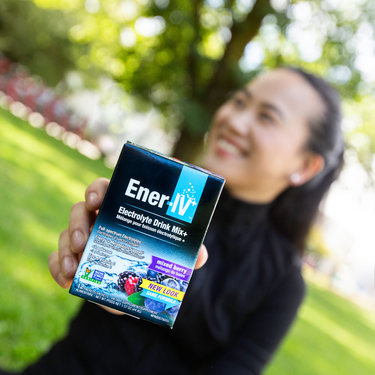
Ener-IV+ is designed around hydration and recovery, which makes it a natural fit for long runs, heavy training blocks and endurance events. The formula combines six essential electrolytes with Vitamin C and Zinc, giving runners a convenient way to support hydration while also providing nutrients involved in normal immune function.
After a long endurance effort, runners need to think about replacing fluid and electrolytes, refuelling and giving the body the nutrients and rest it needs to recover. Ener-IV+ can make the hydration part of that routine easier by combining electrolytes with Vitamin C and Zinc in one drink mix.
Sleep and downtime still do some of the most important work
Runners have access to an enormous range of recovery tools, from massage guns and compression boots to supplements and cold-water immersion. Some of these may be useful, but none makes sleep optional.
The training session creates the stimulus, while recovery gives the body time to adapt. During a marathon block, this means that consistently getting enough sleep is just as much a part of training as completing the long run.
After the marathon, the same principle applies. Muscle soreness may reduce after a few days, but that does not necessarily mean the body has fully recovered from the effort. It is sensible to allow some time before returning to demanding training, particularly if you are still unusually tired, sore or feeling generally run down.
Easy movement, regular meals, adequate hydration and good sleep may not sound particularly exciting, but they are often the foundations that make the greatest difference.
Recovery is not time away from training
The most useful way to think about recovery is not as the absence of training but as one of the things that allows training to work.
A good endurance routine considers the whole picture. Hydration and electrolyte replacement matter after long sessions. Adequate carbohydrate and protein support refuelling and repair. Vitamin C, Zinc and other micronutrients contribute to normal body functions. Sleep gives your body time to recover, while sensible training loads reduce the risk of constantly running on empty.
If you do develop significant symptoms after a race, particularly fever, chest pain, difficulty breathing or an illness that is not improving, it is sensible to seek appropriate medical advice rather than simply trying to train through it.
Running a marathon asks a huge amount from your body. Recovery is your opportunity to give some of that back so you can keep doing more of what you love.
More recovery. More life.