Vitamin C is one of those nutrients almost everyone has heard of. But there’s a lot more to it than its cold-season reputation.
Your body uses Vitamin C every day to support normal immune function, collagen formation, antioxidant protection and iron absorption. It also plays a role in making compounds including L-carnitine and certain neurotransmitters.[1,2]
And because our bodies can’t make Vitamin C themselves, we need to get it regularly through food and, where it fits our routine, supplements.
So, what makes Vitamin C such an everyday essential?
1. Vitamin C supports your immune system
This is the benefit Vitamin C is best known for — and for good reason.
Vitamin C supports several parts of normal immune function, including the activity of immune cells and the protective barriers that help form part of your body’s first line of defence.[1]
It can also be useful once a cold arrives.
A 2023 meta-analysis of placebo-controlled trials using at least 1 g of Vitamin C per day found an average 15% reduction in measures of common-cold severity.[3]
Earlier research has also found that regular Vitamin C supplementation can modestly reduce the duration of colds, with particularly interesting results seen in people exposed to periods of intense physical stress, including marathon runners and skiers.[4]
So Vitamin C isn’t only about supporting your immune system day to day. Research suggests it may also help make cold symptoms less severe and a little shorter-lived.[3,4]
2. Vitamin C helps your body make collagen
Collagen often gets talked about in relation to skin, but it does a lot more than that.
It’s one of the main structural proteins in your body and is found in your:
-
skin
-
bones
-
cartilage
-
tendons
-
ligaments
-
blood vessels.
Vitamin C is needed for the normal formation of collagen because it helps the enzymes involved in collagen synthesis do their job.[1,2]
That makes Vitamin C particularly relevant to anyone interested in staying active and supporting the tissues that help keep the body moving.
Whether your thing is running, hiking, cycling, lifting, pickleball — or simply getting out and doing more — Vitamin C is quietly playing its part behind the scenes.
3. Vitamin C helps you absorb iron from plant foods
This is one of Vitamin C’s lesser-known talents.
Vitamin C can help increase the absorption of non-heme iron, the form of iron found in plant foods.[5]
That makes Vitamin C-rich foods a great partner for foods such as beans, lentils, tofu and fortified cereals.
Think:
lentils + peppers
beans + tomatoes
tofu + broccoli
fortified cereal + berries
It’s a simple example of how nutrients can work better together — and an especially useful one if you eat a largely plant-based diet.
4. Vitamin C provides antioxidant protection
Every day, normal processes in your body produce reactive molecules known as free radicals.
Vitamin C acts as an antioxidant, helping protect cells from oxidative damage by donating electrons and helping maintain the body’s natural antioxidant defences.[1,2]
It also helps regenerate Vitamin E, another important antioxidant.[2]
In other words, Vitamin C isn’t sitting around waiting for cold season.
It’s supporting normal cellular processes every day.
5. The form of Vitamin C matters too
Vitamin C supplements come in different forms, including standard ascorbic acid and mineral ascorbates such as calcium and potassium ascorbate.
Ener-C takes the mineral-ascorbate route.
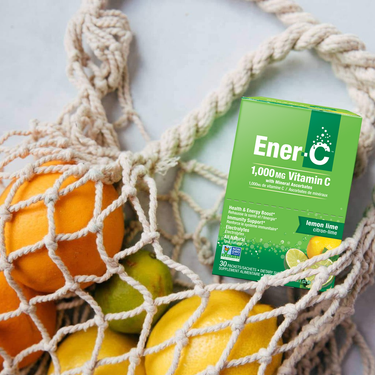
Each sachet provides 1,000 mg of Vitamin C primarily from calcium, zinc, chromium and potassium ascorbates, with a small amount of ascorbic acid used to create its signature fizz.[6]
Mineral ascorbates are bioavailable forms of Vitamin C, and human research suggests some mineral-ascorbate formulations may offer useful differences in how Vitamin C is distributed and taken up by cells.
A 2024 randomized crossover study comparing calcium ascorbate with standard ascorbic acid found potentially advantageous differences in Vitamin C pharmacokinetics and some immune-cell measures at a 500 mg dose.[7]
Earlier human research has also reported higher Vitamin C concentrations inside white blood cells after a calcium-ascorbate-containing formulation, despite similar plasma Vitamin C levels.[8]
It’s one of the reasons we think how Vitamin C is formulated matters, not just the number on the front of the pack.
Making Vitamin C part of your everyday routine
Fruit and vegetables should always be an important source of Vitamin C. Peppers, citrus fruits, kiwi, strawberries and broccoli are all great places to start.[2]
Ener-C offers another easy way to make Vitamin C part of your day.
Alongside 1,000 mg of Vitamin C from mineral ascorbates, each sachet provides 15 additional vitamins and minerals in a refreshing drink mix.[6]
Add it to water. Give it a stir. Enjoy.
Because Vitamin C isn’t just something to think about when cold season rolls around.
It supports your body in plenty of ways, every single day.
Immune support. Collagen formation. Antioxidant protection. Iron absorption.
All from one very well-known vitamin that does a whole lot more than you might think.