The final weeks before a marathon can feel strangely difficult, even though the training itself is starting to ease. After months of building mileage, completing long runs and fitting sessions around work, family and everyday life, suddenly the plan asks you to do less. For many runners, that creates a new kind of uncertainty. When the mileage drops, it is easy to wonder whether fitness is disappearing or whether one more big session might provide some extra confidence before race day.
In reality, the final weeks of marathon preparation have a very different purpose from the middle of the training block. By this point, you are not trying to create a large amount of new fitness. The work that will carry you through 26.2 miles has already been built gradually over many weeks. The priority now is to reduce accumulated fatigue, keep your body familiar with running and arrive at the start line rested enough to use the fitness you have earned.
For runners preparing for New York, this period is also the time to make sure the rest of your routine is working just as hard as the training plan. Pacing, fuelling, hydration and recovery all become increasingly important as race day gets closer, and the habits you practise now are the ones you want to feel automatic when you reach the start line.
Your marathon fitness was built over months, not days
Almost every marathon training block contains a few sessions that did not go exactly as planned. You may have missed a run because of work, shortened a long run because you were tired or lost several days to illness, travel or family commitments. As race day gets closer, it is common to look back through the plan and focus on those gaps rather than the many weeks of training that were completed successfully.
The important thing to remember is that marathon fitness cannot be crammed into the final few weeks. The adaptations that help you run for several hours are built through consistent training over time. Your long runs gradually improve endurance, easier mileage builds aerobic capacity and harder sessions help develop the ability to hold effort under fatigue. One additional hard session at the end of the programme is unlikely to transform any of those qualities, but it can add fatigue at exactly the point when you want that fatigue to begin coming down.
Trying to make up missed mileage so close to race day can therefore be counterproductive. If your overall training has been consistent, one missed long run or an imperfect week will rarely define your marathon. The better approach now is to protect the work you have already done and allow your body to arrive at the start line in a state where it can actually use it.
The taper is still part of your training
The taper is the period before the marathon when overall training volume starts to decrease. The exact length and structure will vary between training plans and individual runners, but the basic objective is the same: reduce fatigue while maintaining enough running to keep the body feeling familiar with movement and race pace.
For runners who have spent months being told to gradually do more, the taper can feel uncomfortable. Reduced mileage can make you question whether you are losing fitness, and some runners become tempted to add extra sessions simply because they feel unusually energetic. That energy is often exactly what you want to happen as the training load starts to decrease.
The aim is not to stop running completely. Most runners will continue with easy mileage and may retain small amounts of faster running or marathon-pace work. What changes is the overall load. Longer sessions become shorter, recovery becomes easier to achieve and the body is given more opportunity to absorb the months of training that came before.
A useful way to think about the taper is that you are not trying to become fitter at the last minute. You are allowing the fitness you have already built to show through as fatigue begins to fall.
Prepare for the New York course you are actually going to run
The New York City Marathon is not a flat, evenly paced race. The route includes significant bridges, changes in gradient and a demanding final section through Manhattan and Central Park, so trying to hit exactly the same pace for every mile can make the race harder than it needs to be.
The first major climb comes almost immediately on the Verrazzano-Narrows Bridge. With fresh legs and the excitement of race morning, it can be easy to push harder than planned without realising it. The descent on the other side creates the opposite temptation, because suddenly the pace feels effortless and runners around you may begin accelerating. Spending too much energy in those opening miles can feel harmless at the time, but a marathon gives you plenty of opportunity to pay for it later.
The same principle applies as the course continues. Bridges and rolling sections are better approached by effort rather than by trying to force the same pace regardless of gradient. A slightly slower mile uphill does not mean the race is going badly, and trying to recover those seconds aggressively on the descent can create unnecessary muscular fatigue.
At this stage of training, there is little benefit in suddenly introducing a new block of hard hill sessions if they have not already been part of your preparation. Continuing to run on gently rolling terrain can help maintain familiarity with changes in gradient, but the most useful skill to practise now is control.
Use your final longer runs to remove uncertainty
The remaining longer runs in your programme are valuable because they give you one last opportunity to make race day feel familiar. They do not need to be heroic sessions. Instead, they can act as rehearsals for the practical details that become much more important after several hours of running.
Wear the shoes you intend to race in and pay attention to whether there are any pressure points, rubbing or discomfort that you have ignored during shorter sessions. Use the socks, shorts and other kit you are likely to wear on race day. If you plan to carry gels, chews or other fuel, practise carrying them in exactly the same way you expect to during the marathon.
Your pre-run routine deserves the same attention. Eat the breakfast you are considering for race morning and notice how long you need to digest it comfortably. If you are planning an early start, rehearse eating earlier than usual rather than discovering on race morning that your normal routine does not work when the alarm goes off several hours before breakfast.
Hydration belongs in this rehearsal too. Long runs are where you should be practising the drink you plan to rely on through marathon training and recovery, and this is where Ener-IV+ earns its place in the routine.
Make Ener-IV+ part of your long-run routine
Long-distance running does not only mean losing water. Sweat also contains electrolytes, and as your long runs become longer and your time on your feet increases, replacing those electrolytes becomes an important part of staying on top of hydration.
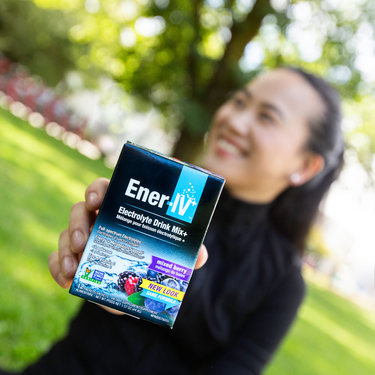
Ener-IV+ is built for exactly this kind of training. It combines six essential electrolytes with Vitamin C + Zinc, bringing hydration and recovery support together in one drink mix. Ener-Life Ad Meta Ads (Cap & St… That makes it a natural choice for the long runs, big training weeks and race-specific sessions where your body is being asked to do more.
Rather than leaving hydration until the end of the training block, make Ener-IV+ part of the routine now. Use it around your longer sessions so that the product, the taste and the way it fits into your day are already familiar before race week arrives.
That consistency matters. Marathon training is full of variables you cannot completely control, from the weather to how your legs feel on a given day. Your hydration routine does not need to be one of them.
Make your fuelling plan specific
Fuelling is another area where marathon runners benefit from becoming a little more precise. Deciding that you will take a few gels during the race is a start, but it does not tell you how much carbohydrate you will actually be consuming or whether that amount is likely to be enough for the duration of your marathon.
During prolonged endurance exercise, carbohydrate provides an important additional source of fuel. Many runners use gels, chews, sports drinks or a combination of products to help maintain carbohydrate availability as the race progresses. The amount that works best varies between runners, which is why your training runs are the place to find out what your stomach can tolerate.
Look at the carbohydrate content of the products you already use and work out approximately how much you are taking each hour. If your current strategy has been comfortable during your longest runs, that information is more valuable than copying somebody else’s race plan simply because they are faster or more experienced.
The final weeks are also the wrong time to completely overhaul your nutrition because of something you have read online. Increasing carbohydrate intake substantially, trying a new gel or changing the timing of your fuel can all affect your stomach. If you want to make an adjustment, use your remaining training sessions to test it rather than introducing it for the first time during the marathon.
The goal is to arrive on race day with a fuelling strategy that feels predictable and a hydration routine you already trust.
Hydration and fuelling have different jobs
Fuelling and hydration work together during marathon training, but they are not doing the same job. Your gels, chews and carbohydrate drinks are there to help provide energy during longer runs, while your hydration routine helps replace the fluid and electrolytes you lose through sweat. Treating them as two separate parts of your plan makes it much easier to work out what you need, when you need it and what has already been tested successfully in training.
For hydration, Ener-IV+ combines six essential electrolytes with Vitamin C + Zinc, making it an easy choice for long runs, harder training days and recovery afterwards. That makes it a strong choice before and after longer runs, during heavy training periods and as part of the recovery routine once the session is finished. Pair it with the carbohydrate and protein you need from food, and you have a much more complete approach to getting ready for the next session.
Recovery still matters in the final weeks
As training volume starts to come down, recovery becomes one of the most useful things you can focus on.
The marathon has already been built through months of training. The job now is to give your body enough support to absorb that work, which means continuing to eat enough, staying on top of hydration and protecting your sleep.
After your final longer sessions, start recovery with the same basics you have used throughout the training block. Replace fluid and electrolytes with Ener-IV+, eat a meal or snack containing carbohydrate and protein, and give your body enough time before the next hard effort.
The opening miles should feel controlled
Race-day adrenaline can make almost any planned pace feel surprisingly easy at the beginning of a marathon. In New York, the crowds, the scale of the event and the excitement of crossing the first bridge can amplify that feeling even further.
This is exactly why the early miles require restraint. A marathon is long enough that you do not need to create time in the opening stages. Running significantly faster than planned because you feel good can increase energy expenditure and muscular fatigue without providing much meaningful benefit.
The changing terrain in New York also means you should expect your pace to fluctuate. An uphill mile may be slower than your average target pace, while a downhill mile may naturally be a little quicker. What matters more is keeping your effort controlled and avoiding large surges simply because the watch shows a number you do not like.
If the first few miles feel almost too comfortable, that is not a problem. You will have plenty of opportunity later in the race to use the energy you saved.
Make the final week deliberately familiar
Race week has an unusual ability to make otherwise sensible runners question everything they have done for months. A new pair of shoes at the expo can suddenly look tempting, somebody else’s gel strategy can seem better than your own and a social media post can make you wonder whether your usual breakfast is completely inadequate.
The safest response is usually to keep things familiar. Eat foods that you know agree with you, use the products that have already worked in training and wear the kit you have tested on long runs. The same applies to hydration.
Sleep also deserves attention during the final week, although one imperfect night before the race does not automatically ruin your marathon. Pre-race nerves can make sleep difficult for many runners, so a more useful goal is to prioritise good sleep across the entire week rather than relying on one perfect night immediately before the start.
If you are travelling to New York, remember that the city itself can add a lot of extra time on your feet. Visiting the expo and enjoying some of the city are part of the experience, but spending the whole day before the race sightseeing may not be the best use of a taper you have spent weeks preparing for.
Arrive with a routine you trust
The final weeks of marathon training can create the feeling that there must still be something important left to do. In reality, the most important work has already happened. Your endurance was built during the long runs, your aerobic fitness came from weeks of consistent mileage, and the harder sessions taught your body how to maintain effort when running became uncomfortable.
What matters now is protecting that work. Allow your training volume to come down, keep eating well, continue practising the fuelling plan you intend to use and make hydration and recovery part of the routine rather than an afterthought.
That is where Ener-IV+ belongs. With six essential electrolytes plus Vitamin C + Zinc, it is made for the longer sessions, harder efforts and recovery days that come with endurance training. Keeping it in your training routine means one less thing to rethink as race day gets closer.
By the time you reach the start line in New York, the goal is not to have squeezed every possible session into the previous few weeks. It is to feel rested, fuelled, hydrated and confident that the routine you have practised will carry you through the miles ahead.