There’s something about the end of summer that makes us want to overhaul everything at once.
Earlier mornings. Better meals. More workouts. More water. Less scrolling. Perfect sleep.
But a good reset doesn’t need to mean a brand-new you.
Research into habit formation suggests a more realistic approach: start small, repeat behaviours consistently and don’t worry about getting it perfect. In one real-world study, the time it took new habits to become more automatic varied from 18 to 254 days—and missing one opportunity didn’t significantly derail the process.[1]
So, rather than trying to reinvent your whole routine, here are five simple habits worth taking into the season ahead.
1. Make your new habit easy to repeat
When motivation is high, going big is tempting.
But habits are built through repetition, not one heroic Monday.
Research suggests that repeating a behaviour in a consistent context helps it become more automatic over time.[1]
So instead of adding another item to your to-do list, connect a new habit to something you already do.
Coffee brewing? Fill your water bottle.
Finished lunch? Take a quick walk.
Brushed your teeth? Put your phone away for the night.
The goal isn’t to create the perfect wellness routine.
It’s to make one useful behaviour easier to do again tomorrow.
2. Get some light earlier in your day
Your body has an internal timing system—your circadian rhythm—and light is one of the environmental signals that helps regulate it.
Controlled human research has shown that bright-light exposure can shift circadian timing depending on when the light is received.[2]
You don’t need an elaborate morning protocol.
Take the dog out. Walk for coffee. Step outside before opening the laptop. Eat breakfast near a bright window.
Think of it as giving your body a clear signal:
The day has started.
Consistency at the other end of the day may matter too. A large observational study involving more than 60,000 UK Biobank participants found that greater sleep regularity was associated with lower all-cause mortality risk.[3]
That doesn’t mean bedtime needs to happen at exactly 10:02 every night.
Think rhythm, not rigidity.
3. Put hydration on autopilot
Most of us know hydration matters.
Remembering to drink when work gets busy is another story.
Controlled studies have found that mild exercise-induced dehydration was associated with changes including greater fatigue, headaches, concentration difficulty and some measures of mood and cognitive performance.[4,5]
That doesn’t mean every afternoon slump is dehydration—or that your water bottle needs to become your entire personality.
It just means hydration is worth making easy.
Drink when you wake up. Keep a bottle visible while you work. Have something with meals. Replace fluids after sweaty exercise. Pay extra attention on hot or particularly active days.
Your needs will vary with your body, climate, diet and activity level, so there isn’t one magic number for everyone.
The best hydration habit?
The one you actually remember.
4. Remember that everyday movement counts
We love a workout.
Running, riding, hiking, strength training, pickleball—whatever gets you moving.
But your workout doesn’t have to be the only movement in your day.
In one randomized crossover study, adults who broke up prolonged sitting with short periods of light or moderate walking had lower post-meal glucose and insulin responses than when they sat continuously.[6]
The study was small and involved a specific population, so it doesn’t mean everyone needs to march around every 20 minutes.
The useful takeaway is simpler:
Movement outside your workouts matters too.
Walk while taking a call. Take the stairs. Go around the block after lunch. Get up between meetings. It all counts.
5. Build a routine for your busy days too
A routine that works when everything goes perfectly is easy.
The real test is what happens on the Wednesday when you oversleep, miss your workout and your calendar suddenly explodes.
That’s where a minimum version helps.
Your hour-long workout becomes a 15-minute walk.
Your perfect morning becomes breakfast and five minutes outside.
Your planned bedtime slips a little—but you get back to your usual rhythm the following night.
Habit research found that missing one opportunity did not materially affect the habit-forming process.[1]
One missed day isn’t a failed routine.
You don’t need to “start again Monday.”
Consistency beats perfection.
Make wellness easy to come back to
The common thread through all five habits is simple:
Reduce the effort it takes to do the things you want to keep doing.
Leave your shoes by the door. Keep your water bottle visible. Put fruit where you’ll see it. Prepare tomorrow’s things tonight.
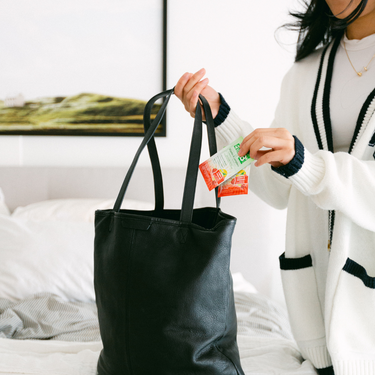
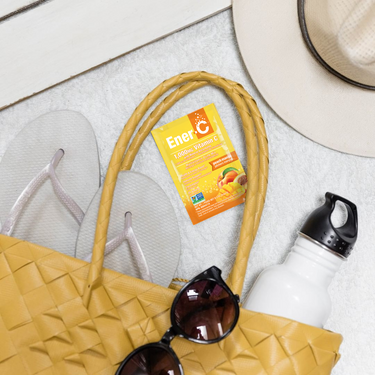
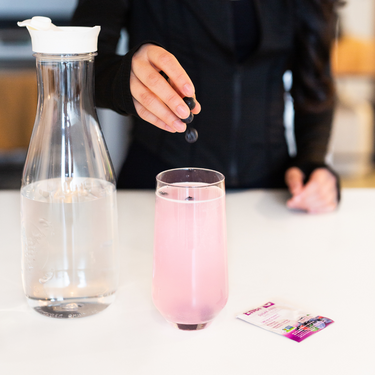
And if vitamins are part of your routine, connect them to something you already do.
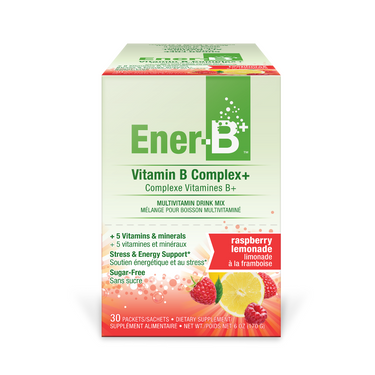
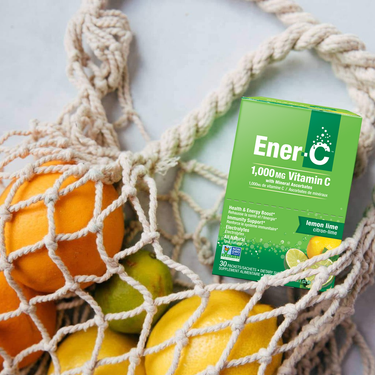
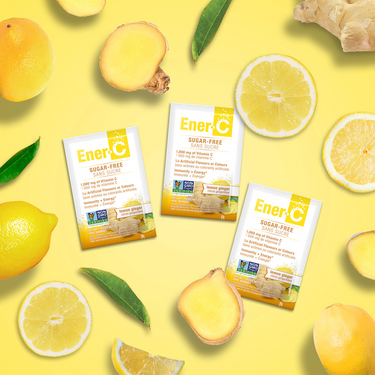
Ener-C provides 1,000 mg Vitamin C plus 15 additional vitamins and minerals, while Ener-B+ combines all eight B vitamins with Vitamin C, electrolytes, choline and inositol.[7,8]
Because they’re drink mixes, they can slot naturally into breakfast, your morning water or a mid-day reset.
They’re not substitutes for sleep, nutritious food, movement or hydration.
They’re simply one part of the bigger picture.
So this season, forget the all-or-nothing reset.
Pick one habit.
Make it easy.
Keep coming back to it.
Because the best wellness routine isn’t the one that looks impressive on Monday morning.
It’s the one that still works on a busy Wednesday.